Showing posts with label Auschwitz I. Show all posts

Wednesday, 25 January 2012

Auschwitz: Central Construction Office


In his judgment of the 2000 libel trial of Irving vs.
Penguin & Lipstadt, Justice Gray stated:
The most important Auschwitz archive that survived the war was that of the Central Construction Office at Auschwitz. The main archives of the camp Kommandantur had been destroyed by the Germans before they evacuated the camp in January 1945. The Construction Office was 300 yards away and through an oversight was left intact.
- Judgment 7.58

Interior view of a room of the office building of the Central Construction Office in Auschwitz
(APMO, neg. 20995/138). Source: Carlo Mottongo's THE CENTRAL CONSTRUCTION OFFICE OF THE
WAFFEN-SS AND POLICE AUSCHWITZ ORGANIZATION, RESPONSIBILITIES, ACTIVITIES

Leading Revisionist Carlo Mottongo states (in the above mentioned book pp.7-8) that the Soviets took back to Moscow over 88,000 documents from the Auschwitz Central Construction Office, and although this was the greater share of the documents found in the office building of the Central Construction Office, many documents remained there.

I enquired as to the location of the premises of the Auschwitz Central Construction Office" aka the "ZBL" (Zentralbauleitung) at the Information Desk in the Auschwitz Visitor Centre. The young lady at the desk did not know, so she asked her supervisor, who didn't know either. She then asked two Auschwitz tour guides, neither of them knew where it was, but all of them were very friendly and immensely helpful. Finally, one of the tour guides took the piece of paper on which I'd written "Central Construction Office. ZBL", and headed off behind a "staff only" door. After 5 minutes he returned and advised that: "It is no more, demolished after the war, houses are there now." But he kindly gave me directions to where it once had approximately stood.


Photo taken at the position marked "A" on the above google earth view
of the road on which the office of the Central Construction Office stood

Another house along the same segment of road

Auschwitz 2: Section B2G: Canada 2


Compound B2G nicknamed Canada II

In the 1996 edition of Death Dealer: The Memoirs of the SS Kommandant at Auschwitz Rudolph Höss, footnotes added to "Rudolph Hoess' original text" by Steven Paskuly read:
33. There were two Canadas. Canada I was near the Auschwitz camp, Canada II was located outside the barracks area across from the sauna and shower building on the west side of the Birkenau camp. The term Canada was coined by the prisoners because the nation of Canada meant wealth and prosperity. ...
35. Canada II consisted of thirty-five barracks. On January 23, 1945, five days before the liberation of the camp by the Soviet army, the SS set fire to thirty storehouses crammed full with the property of the murdered millions. The barracks burned for several days. In six of the partially destroyed barracks 1,185,345 men's suits and women's outfits, 43,255 pairs of shoes, 13,694 carpets, and huge quantities of hairbrushes, shaving brushes, and other articles used in everyday life were also found. 
Rudolph Höss. Edited by Steven Paskuly. Translated by Andrew Pollinger. Foreword by Primo Levi. Death Dealer: The Memoirs of the SS Kommandant at Auschwitz Rudolph Höss. Da Capo Press, Massachusetts. 1996. p. 40.

Looking eastwards at the Canada II section, behind me was the Central Sauna

Museum sign for Canada II

Enlargement

Museum sign at Canada II

Enlargement

In the remains of Block 5 of Canada II is a collection of goods stolen from Jews

Evidence of the Holocaust inside the display at Block 5 in Canada II


Tuesday, 24 January 2012

Auschwitz 2: Central Sauna


"In order to make prisoner conspicuous and the prevent escape, all their hair was cut off."
Nothing to do with preventing the spread of typhus then? 


The plaque by this cart reads:
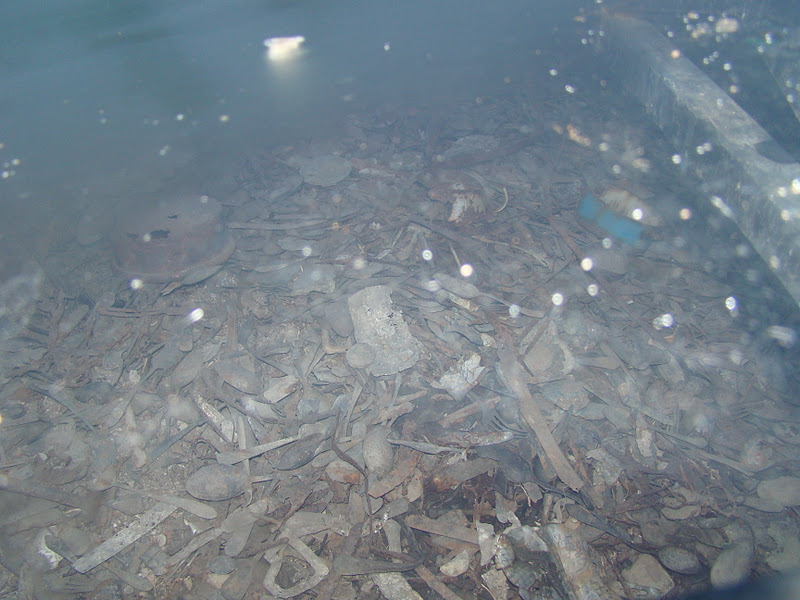
The ashes of the people who had been murdered in the camp were dumped in ponds and rivers, and strewn on fields, as fertilizer. This cart was recovered from a pond near Crematorium IV. The pond was one of the many places in Birkenau with the ashes of people who had been murdered and whose bodies had been burned.


Monday, 23 January 2012

Auschwitz 2: Krema 5


The story goes... Unlike Kremas 2 & 3 which were designed as morgues, but simply modified to fit a purpose. Auschwitz-Birkenau's Kremas 4 & 5 were specifically designed and built to kill Jews with poison gas.

Krema 5 was the last gas chamber/crematorium to be destroyed by either camp prisoners or the Germans.
full details


Position of Krema 5 at Auschwitz-Birkenau


Saturday, 21 January 2012

Auschwitz 1: Block 10


Block 10 is where SS doctors supposedly carried out experiments on prisoners.
Access is denied to Block 10 as of Jan 2012


Block 10 on the left, with the enclosed yard between it and Block 11,
the camp prison, inside the yard is the Wall of Death


The Nazis did indeed sterilize people at Auschwitz, intercepted messages
prove it, unfortunately for Holocaust promoters; they don't prove gassings


Block 10a entrance (the first floor)


Rears of Block 10 (right) Block 11 (left) and the Wall of Death in the middle 


Block 10 (left) with all the windows boarded-up

Auschwitz 1: Block 11


Block 11, the Auschwitz prison and where the first gassings occurred.
Next to Block 10, with the enclosed yard, including the Wall of Death


Room where trials were held


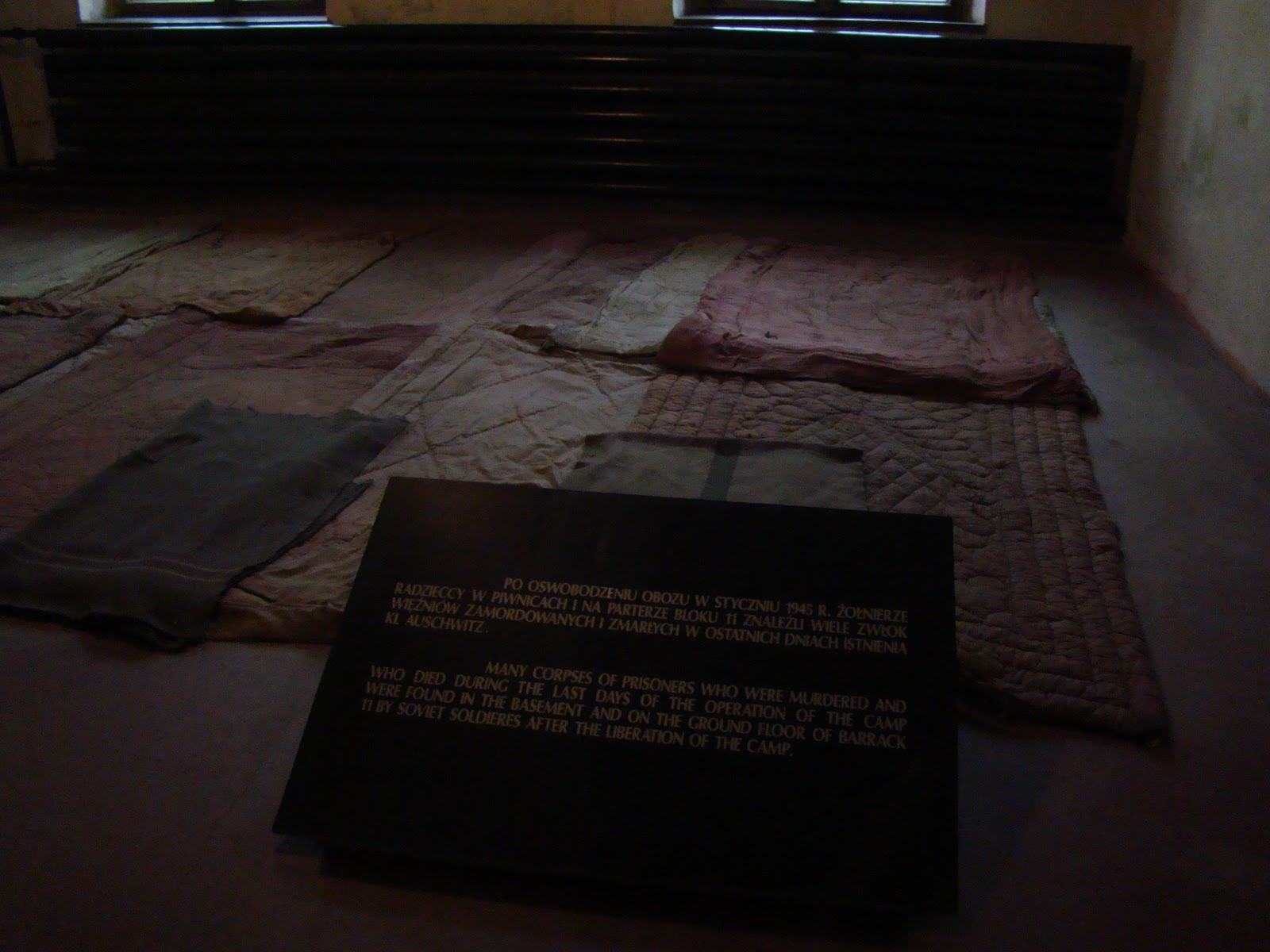
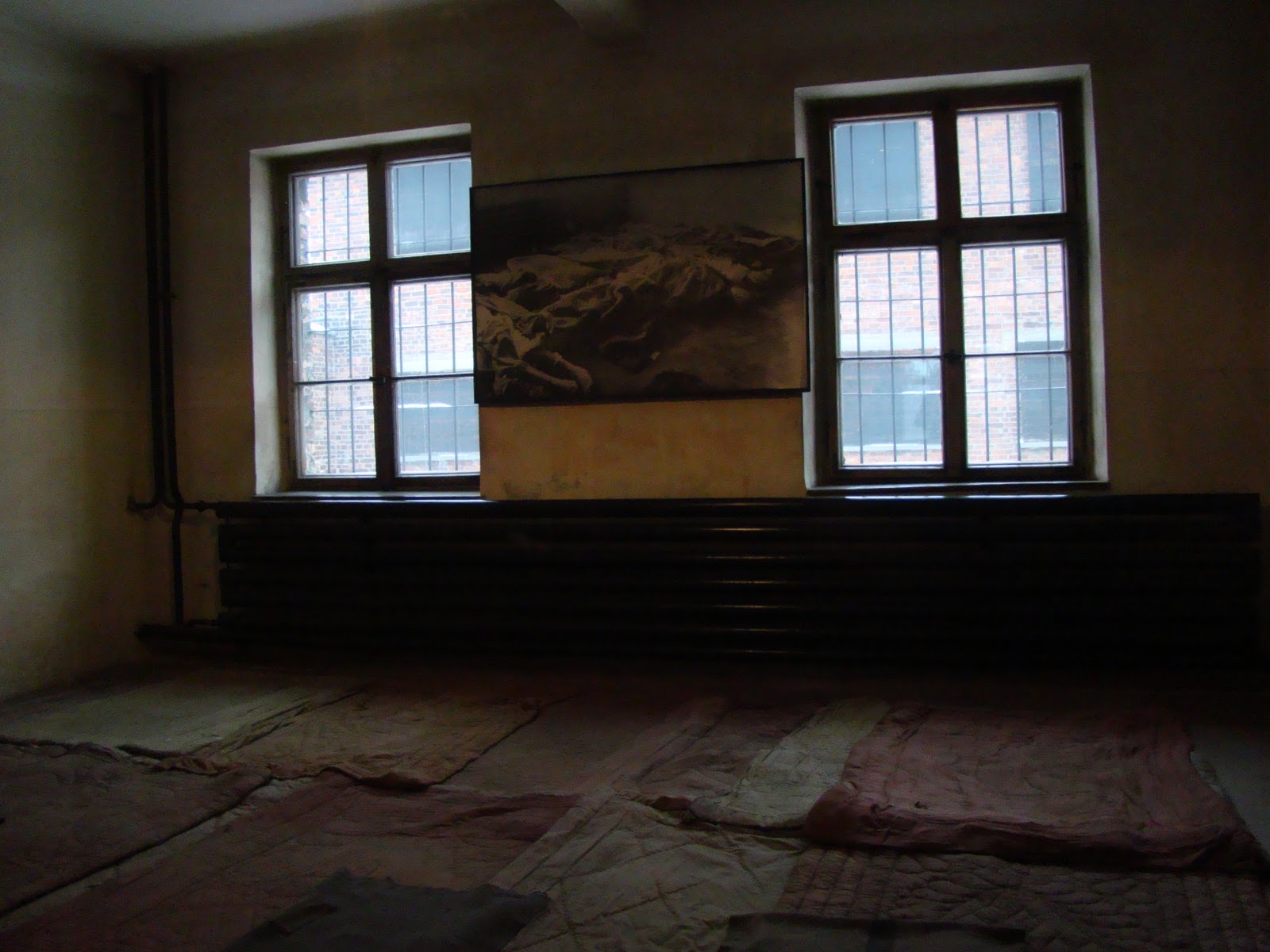
Room where corpses were found after liberation


Prisoner bunks


"The washroom where women stripped before execution
then they were led in twos to yard and shot at the death wall"


Cartoon of the Wall of Death


Cartoon of nubile women


Cartoon of prisoners pulling cart full of corpses and the
gas chamber/crematory chimney working overtime


Cartoon of German fiendishness


Map of the basement of Block 11


Photo of part of the basement, steps must lead into
the enclosed prisoner yard between Block 10 & 11 


Sign about the first gassing at Auschwitz


Peep hole on cell door


Cell doors


Sign about the standing cells


The standing cells


Cell where Saint Kolbe died 


Corridor in the centre of the basement, the doorways on the sides lead
to parallel, but shorter corridors with doors to the individual cells


Bench for whipping prisoners


Cartoon of inspection


Cartoons of prisoners playing music


Guide to armbands